
Custom Software vs. Off-the-Shelf Software: Which Is Right?
Should your business use custom software or an existing tool? Compare the benefits, costs, flexibility, and trade-offs to make a better decision.
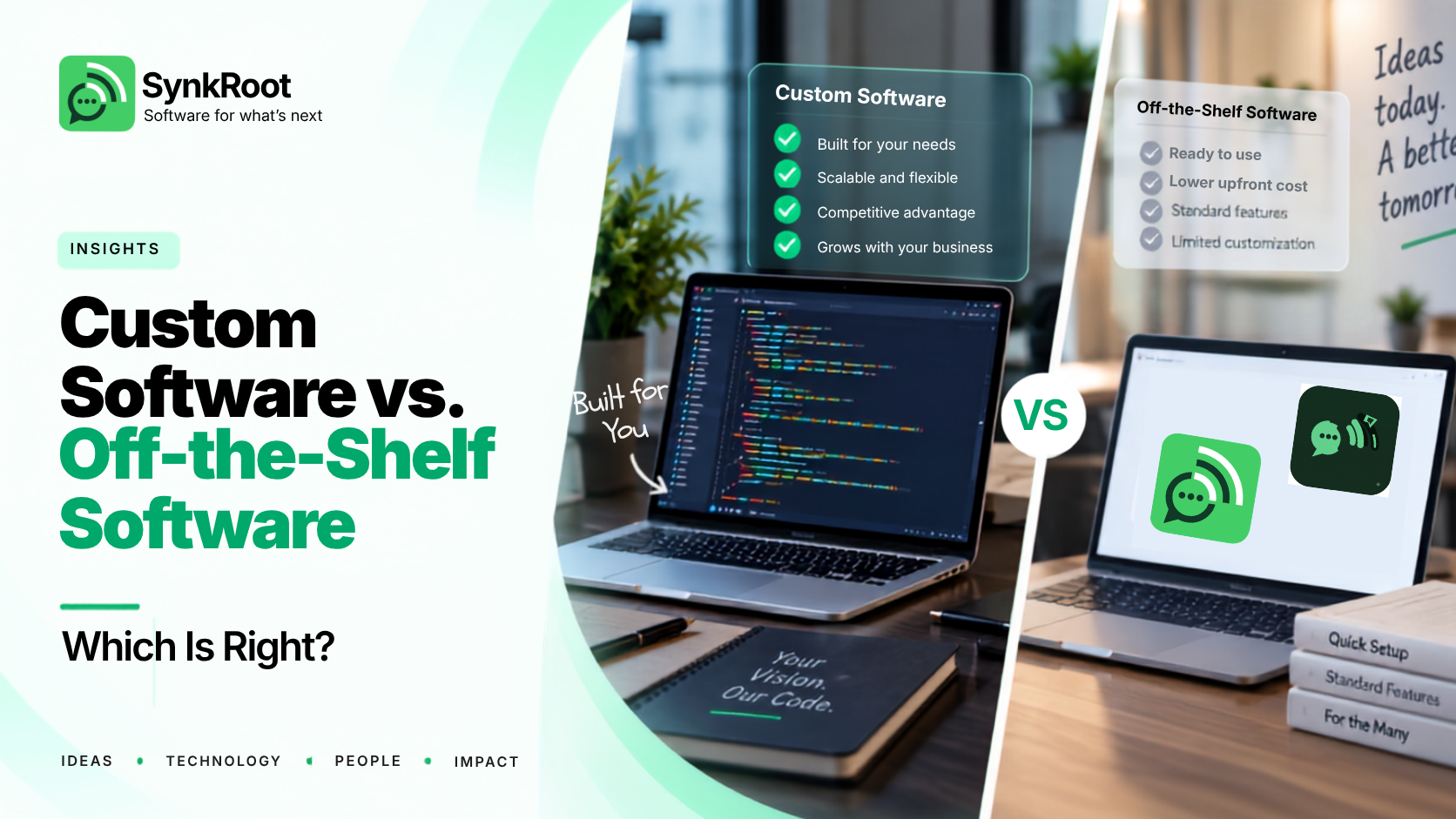
Custom Software vs. Off-the-Shelf Software: Which Is Right for Your Business?
Choosing software for your business can feel like a simple decision.
You find a tool, compare the price, check the features, and decide whether it fits.
But as the business grows, the decision can become more complicated.
An existing software product may be affordable and easy to start with. Custom software may offer more control and flexibility. Both can be useful, depending on what your business needs.
So how do you decide?
Let's look at the differences in practical terms.
What Is Off-the-Shelf Software?
Off-the-shelf software is a product that has already been built for a broad group of users.
Examples include accounting software, project management tools, customer relationship management systems, and communication platforms.
These products usually offer a predefined set of features.
Why Businesses Choose It
Off-the-shelf software can be a good choice when:
The business needs a common feature quickly.
The budget is limited.
The team does not need a highly customized workflow.
The business wants to start using a solution without building it.
The existing software already solves the main problem.
For many businesses, using an existing tool is the most practical starting point.
There is no need to build something from scratch if a suitable solution already exists.
What Is Custom Software?
Custom software is built around the specific needs of a business or organization.
Instead of adapting the business to an existing product, the software is designed around the processes, requirements, and goals of the business.
This may include a custom internal platform, a specialized workflow system, a customer portal, or a complete digital product.
Why Businesses Consider It
Custom software can be useful when:
Existing tools do not fit the business process.
The business needs specialized features.
Multiple systems need to work together.
The workflow is unique or complex.
The business wants greater control over the product.
The software is an important part of the company's competitive advantage.
The value is not simply that the software is custom. The value comes from building something that addresses a real need.
The Main Differences
FactorOff-the-shelf softwareCustom softwareStarting pointAlready builtBuilt around your requirementsSetupUsually quickerRequires planning and developmentFlexibilityDepends on available featuresCan be tailored to the businessInitial costOften lowerUsually higherMaintenanceVendor-managed, depending on productRequires an ongoing maintenance approachBest fitCommon business needsSpecialized or unique requirements
These are general comparisons. Actual costs, timelines, and flexibility depend on the specific software and project.
When Off-the-Shelf Software Makes Sense
Imagine a small business that needs basic accounting, email, and team communication.
There may be no reason to build custom software for these needs. Existing products may already provide the required features at a reasonable cost.
In this situation, buying software can save time and avoid unnecessary development work.
The same applies when a business is still testing an idea and does not yet know what its long-term requirements will be.
Starting with an existing tool can help the team learn what it actually needs.
When Custom Software Makes Sense
Now imagine a business with a complex approval process.
Requests move between several departments. Each department has different responsibilities. Important records are stored in different places. Managers need visibility into progress, and the workflow does not fit neatly into an existing tool.
In this case, custom software may be worth considering.
A solution could be designed around the actual workflow, with clear ownership, connected records, and the features the team needs.
The decision should be based on the business value, not simply on the desire to have a custom application.
The Cost Question
One of the biggest differences is the way costs are structured.
Off-the-shelf software often involves a subscription, licensing fee, or other recurring cost.
Custom software requires investment in planning, design, development, testing, hosting, and maintenance.
But the cheapest option at the beginning is not always the cheapest option over time.
An existing tool may require workarounds, multiple subscriptions, manual data entry, or additional integrations. Custom software may require more initial investment but provide a better fit for a particular process.
The right question is:
Which option provides the best value for the business over the period it will be used?
Questions to Ask Before Deciding
Before choosing a software approach, consider:
Does an existing product already solve the problem?
How much customization does the business actually need?
How important is this workflow to the business?
How many people will use the system?
Does the software need to connect with other systems?
What is the available budget?
Who will maintain the software?
How might the business requirements change over time?
These questions can help clarify the decision.
How SynkRoot Can Help
At SynkRoot, we believe the right technology starts with understanding the business problem.
If an existing tool is enough, there may be no reason to build something new.
If the business needs a more specialized solution, custom software may be a better fit.
Our role is to help businesses explore their requirements, understand the options, and move toward a practical technology solution.
The goal is not to build custom software simply because it is possible. The goal is to build the right solution for the business.
Thanks for reading.
DISCUSSION
Comments (0)
No comments yet. Be the first to share your thoughts.